
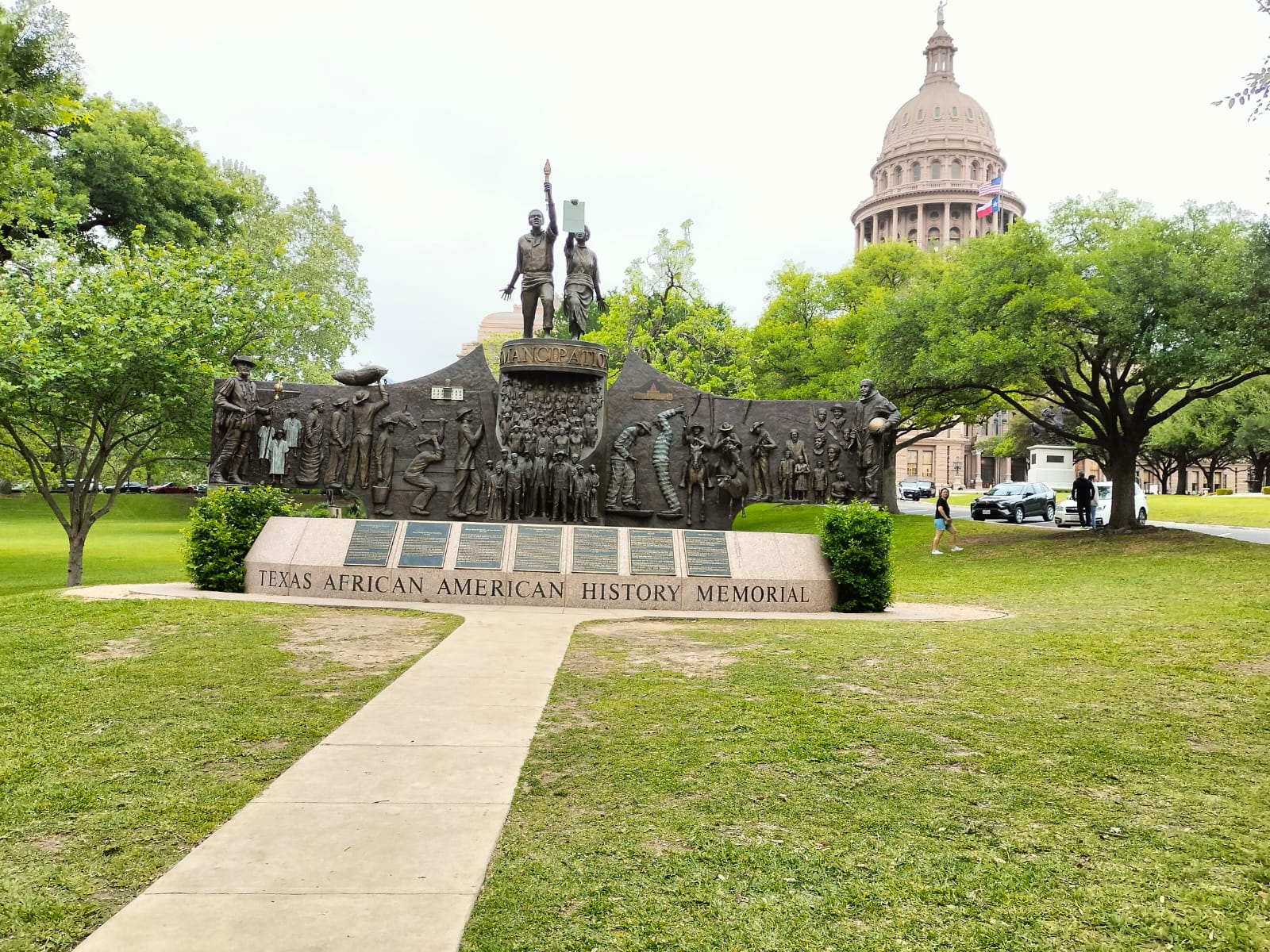
In the very heart of Austin, Texas, in the shadow of the imposing State Capitol, stands the Texas African American History Memorial.
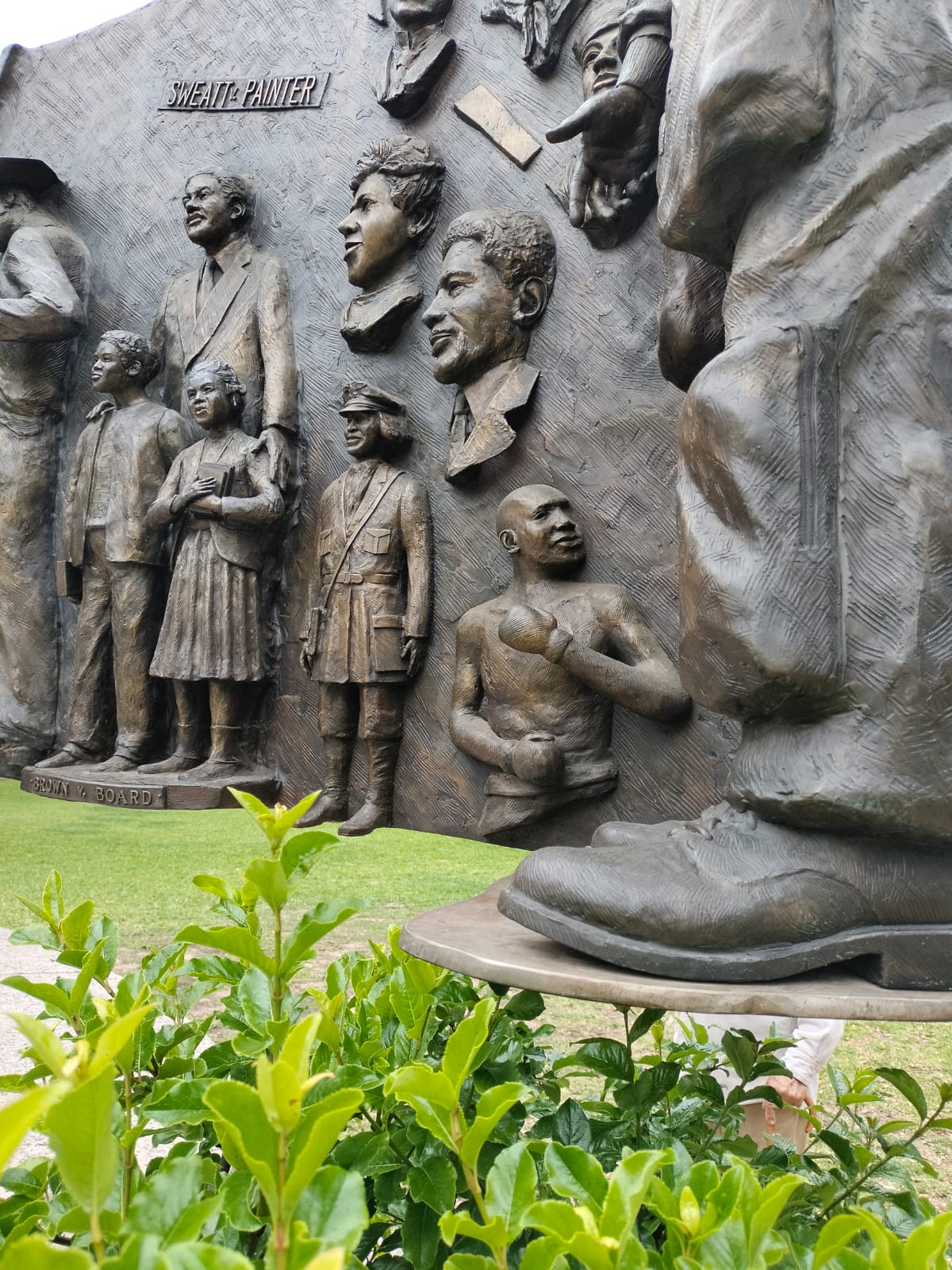
Among the bronze figures narrating centuries of struggle and resilience, one unmistakable silhouette stands out: that of Jack Johnson, the first Black world heavyweight champion and one of the most controversial athletes in history.
Born in Galveston, Texas, in 1878, Johnson fought not only his rivals in the ring but also the racial barriers of the Jim Crow era.
In 1908, he made history by defeating Tommy Burns in Australia, claiming a crown that until then had been “reserved” for white fighters.
His masterful defensive style and bold personality—smiling at his opponents and living with a freedom that defied the norms of the time—made him a symbol of pride for the Black community and an acute aggravation for the legal system of the era.
In 1913, at the height of his career, Johnson was convicted of violating the Mann Act, a regulation designed to combat human trafficking that, in his case, was maliciously used to punish his interracial relationships.
Facing an unjust conviction, Johnson lived for years in exile before returning to the United States in 1920 to serve an utterly unjust prison sentence.
Despite the boxing world always recognizing his greatness, that legal stain remained on his record for more than a century after his death in 1946.
The road to official redemption was long and grueling. For decades, boxing figures, historians, and family members fought for the U.S. government to recognize the unjust nature of his conviction.
Finally, on May 24, 2018,and in his first term, President Donald Trump signed a posthumous pardon for Jack Johnson.
In an Oval Office ceremony, joined by Lennox Lewis, Sylvester Stallone, Deontay Wilder, and Mauricio Sulaimán, among others, a chapter of racial injustice that had lasted 105 years was finally rectified.
Today, his presence at the Texas Capitol is not just a tribute to his sporting record, but a reminder that the truth always finds its way.
In the eyes of the law, Jack Johnson is no longer seen as a convict, but as what he always was: a pioneer who opened doors for generations of athletes and a Texan whose courage changed the course of world sports.



test