
By Brzostek Top Team | Gdańsk, Poland
In many places, boxing is still reduced to a stereotype: a sport of impact, aggression, and blows to the head. That narrow view makes it difficult for social boxing projects to win media attention, public trust, or financial support. In Gdańsk, however, one club has spent the past several years proving that boxing can also be a language of structure, dignity, therapy, and hope.
A mission born inside the gym
At Brzostek Top Team, boxing is not treated as an end in itself. It is used as a tool: to create routine, build self-confidence, regulate emotions, and give children a sense of agency. The club’s Autism Boxing Academy grew out of direct experience rather than theory. One father used to bring his two sons to the club. The younger one trained. The older one, who was on the autism spectrum, watched quietly from behind the barrier. One day the father asked whether his older son could try as well. For coach Maciej Brzostek, it was unfamiliar territory. He had never worked with autistic children before. He did not know whether boxing could be adapted to their needs, or whether the training environment could hold them safely. But he decided to try.
The difficult first steps
The first sessions were anything but easy. One child ran across the room, another withdrew into a corner, another shouted, and someone else tried to bite a teammate. The scene did not resemble any traditional boxing class. Yet instead of walking away, Maciej Brzostek began to learn. He read about autism, spoke with behavioural therapists and specialists, observed the children closely, and reworked the way he coached. Over time, the sessions became more structured, more predictable, and more effective. What had looked like disorder gradually became a method.
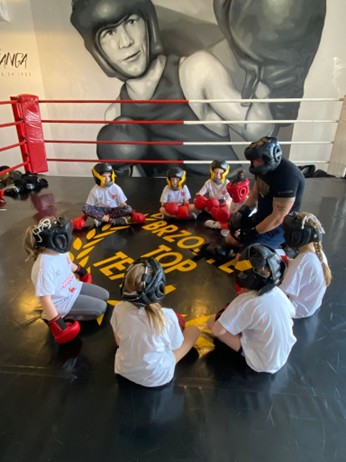
Photo Lucyna Mach. Children taking part in a structured boxing session designed to create calm, routine, and trust.
Maciej Brzostek: from champion to coach with a mission
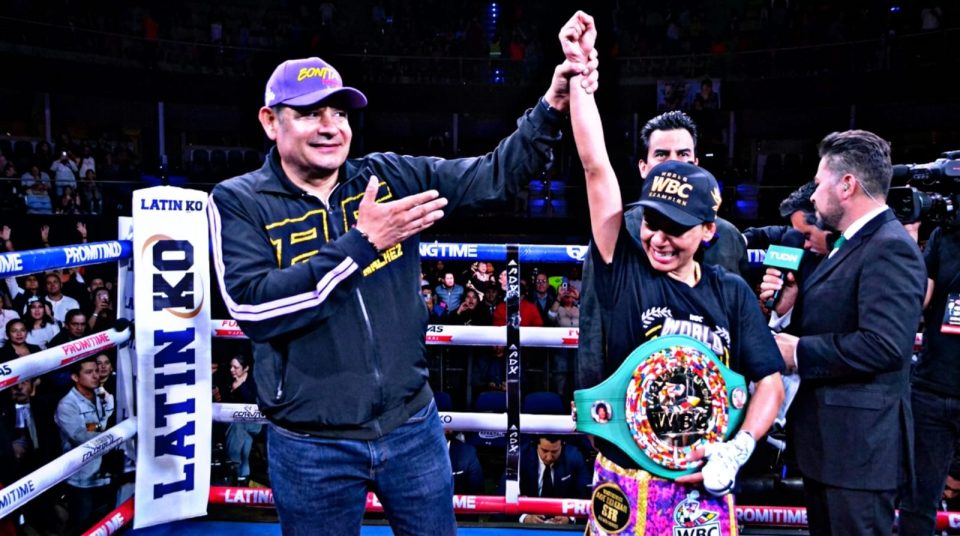
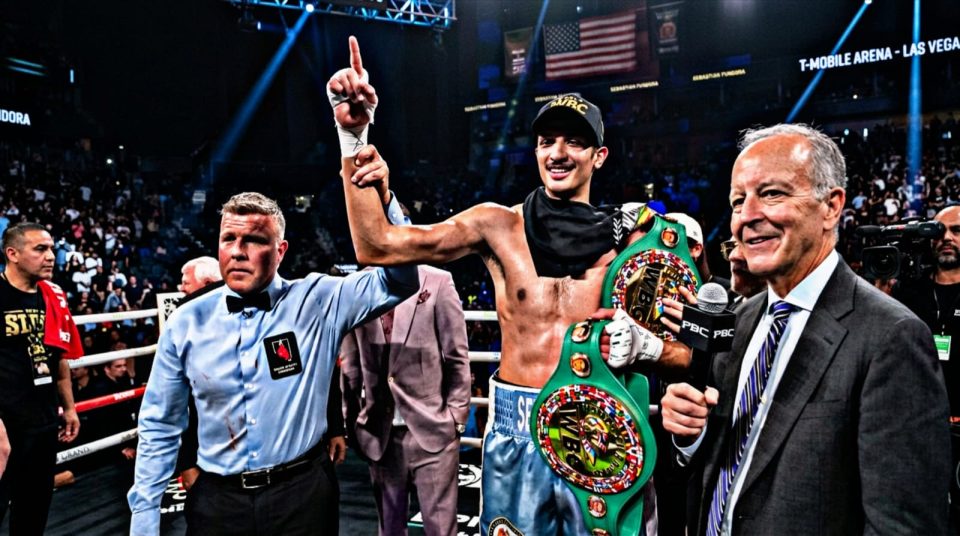
The story of the club cannot be told without Maciej Brzostek. Long before he became a coach, he was a successful boxer himself – a Polish Championship gold medallist who built his life around the discipline, sacrifice, and values of the sport. Today he is known not only for his own achievements, but for the athletes he has developed. Among them is Kacper Meyna, a boxer who has gone on to win WBC belts, as well as young competitors who have earned medals at the Polish Championships. But for Brzostek, the most important title is not attached to a belt. It is the role he now plays every day as the head coach of the Autism Boxing Academy. This academy is his idea, his mission, and in many ways his life’s work. The club itself was built around his dream: that boxing could shape strong athletes, but also serve people who would otherwise never be invited into this world.
Why the stereotype still matters
Despite the results, the club continues to face a barrier that has little to do with sport and everything to do with perception. In many institutions, city offices, and grant-making organisations, boxing still sounds like the wrong answer to a social problem. It is easier to support projects associated with art, therapy, or education than a boxing gym. That stereotype has consequences. It limits funding opportunities, weakens media interest, and forces the club to repeatedly explain that this work is not about teaching children to fight. It is about helping them function, focus, communicate, and belong. Changing that perception is one of the team’s hardest battles.
Lucyna Mach: leaving corporate life for the club
Another key figure in this story is Lucyna Mach, who spent more than 30 years working in large international corporations before deciding, one year ago, to dedicate herself fully to the association. The transition was far from simple. Managing a social sports organisation demanded long hours, constant improvisation, and complete emotional commitment. Entering the boxing world also meant stepping into a traditionally male, often closed environment where credibility is not given easily. Lucyna had to earn her place through consistency, discipline, and daily work.
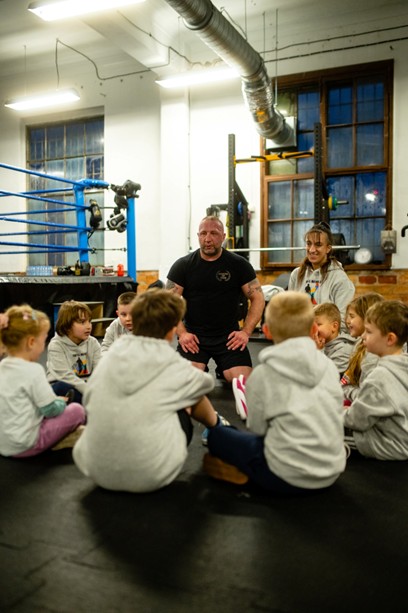
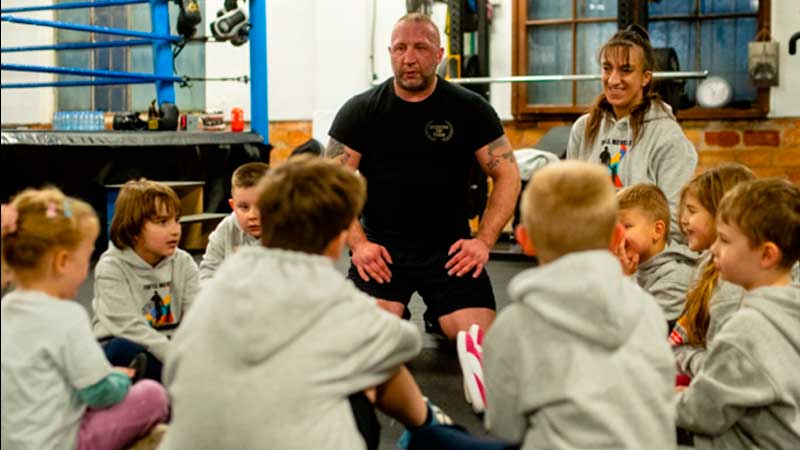
Photo Jan Lisowski. Coach Maciej Brzostek and the team during a group session built around communication and connection.
The price of commitment
There were moments when the burden felt overwhelming. Because the club could not afford a full administrative team, Lucyna often handled everything herself: paperwork, sponsors, reporting, logistics, communication, and, when necessary, reception duties. She spent Saturdays in the club catching up on formal responsibilities that could not be completed during training days. One of the most difficult periods came when she had to replace Maciej for an entire week during his absence. She remained in the club for up to 12 hours a day. By the end of that week, her teenage children told her: “Your club is more important than us.” It was one of the most painful moments in her journey. But she did not walk away. By then, she already knew that she and Maciej formed a partnership capable of building something larger than either of them alone.
A club built on transparency and values
What united Lucyna Mach and Maciej Brzostek from the beginning was not only work ethic, but a shared belief that a social organisation must be transparent if it wants to be credible. Lucyna’s background in audit and corporate governance shaped the way the club approached reporting, compliance, documentation, and accountability. For both of them, trust had to be earned not through slogans, but through clear action. That principle became an important foundation for Brzostek Top Team as the association grew.
From local initiative to European significance
What began as an improvised response to one child’s needs developed into the European Boxing Academy for Children with Autism and Asperger’s Syndrome. In 2023, the team reopened recruitment and expanded its work to include children with Down syndrome. At the same time, the club began working with researchers and specialists to build a stronger methodology around its experience. The project was presented at the University of Gdańsk during the conference “Autism Does Not Define”, giving the academy visibility in academic and social circles.

Photo Lucyna Mach. A quiet symbolic frame from the club: support, care, and the atmosphere behind the training sessions.
Recognition from WBC Cares
An important international turning point came after a meeting during the WBC Convention. What started there as cautious, early conversations about possible cooperation has now begun to take real shape. WBC Cares has decided to extend its attention and support to the club in Gdańsk. For Brzostek Top Team, this is more than a symbolic gesture. It is a meaningful signal that the boxing world is beginning to recognise a different dimension of the sport – one rooted not only in competition, but in care, inclusion, and human development. For the club, it is a chance to show the world how boxing can truly change lives. Together, the team believes, we are stronger.
What success looks like here
Inside the academy, success is rarely measured in medals. It appears in quieter forms: a child who can now remain in the room, complete an exercise, tolerate physical closeness, wait for a turn, or smile after finishing a task that once felt impossible. These changes are often invisible to outsiders, but for families they are profound. And for the coaches, they are proof that this work matters.
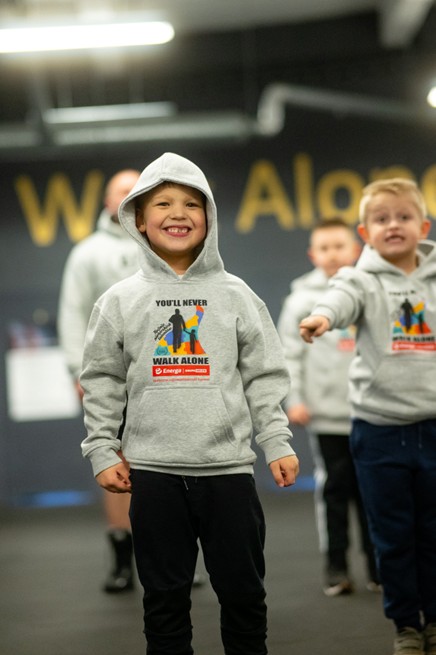
Photo Jan Lisowski. Joy and confidence gained through movement, repetition, and a sense of belonging.
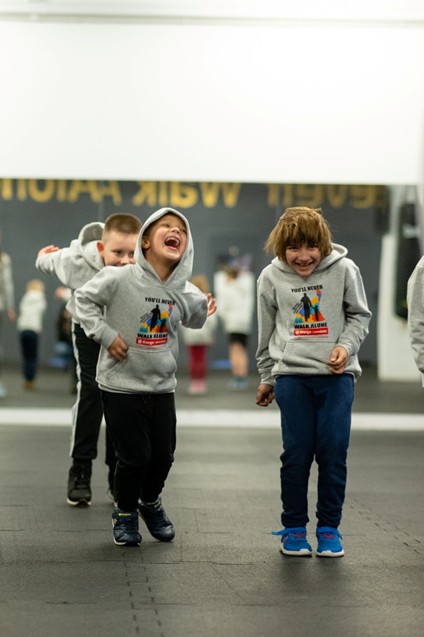
Photo Jan Lisowski. For many children, the academy is the first place where progress feels visible and shared.
A wider lesson for boxing
The experience of Brzostek Top Team suggests that boxing’s future does not have to be limited to the ring. In the right hands, with the right values, it can become a disciplined and effective framework for inclusion. That is the story emerging from Gdańsk: not a sentimental story, and not a public-relations exercise, but a serious argument for seeing boxing differently. If that shift in thinking continues – in media, in institutions, and in the sport itself – then what started in one Polish club may travel much further.

test