By James Blears
This immortal line comes from the Bob Dylan song entitled Hurricane, about Rubin Carter, who was unjustly imprisoned for almost twenty years for a crime he didn`t commit.
In this article, we delve into the careers of a dozen boxers who were so near yet… so far from becoming Champions of the World. In some cases, the colour-bar line of racial prejudice was drawn in Caucasian chalk. In modern but still hard times, Marvin Hagler actually made it to the top and became undisputed middleweight champion of the world. But Joe Frazier`s observation about him, rings true for an earlier era. Marvin shared how he fared:
‘One time Joe Frazier told me that there were three things going against me. I was black, I was southpaw and I was good. He was right. It was never easy’’
Concerning earlier times-hard times fighters, they were born into an era, when proper rankings didn`t exist, newspaper decisions muddled and muddied the waters and being talented as well as risky to take on, they were avoided like the plague.
Others were very good fighters, but had the misfortune of competing during a blue riband purple patch epoch, where there was an overflowing abundance of talent. That final wrung of the ladder extended to a gulf, and it simply wasn`t enough to be a step-up mighty puncher. Boxing skills, a rock-solid chin, ring-generalship and genius…all prerequisites, in order to encapsulate the whole enchilada. The sum must equal its parts and not one segment can be left lagging and lacking, or the final wrung will prove to be the wrong wrung.
Some boxers were born in countries from where there was not such a direct route at that time to the top of the boxing ladder, which was mostly dominated by Europe but especially the United States.
The case of Rubin Carter involves an appalling, agonizingly prolonged and monumental miscarriage of justice. He and John Artis were wrongly convicted of a 1966 triple homicide in the Layfayette Bar and Grill in Paterson, New Jersey. No evidence linked them to the crime and they weren`t identified as suspects. Then things radically changed for the worse.
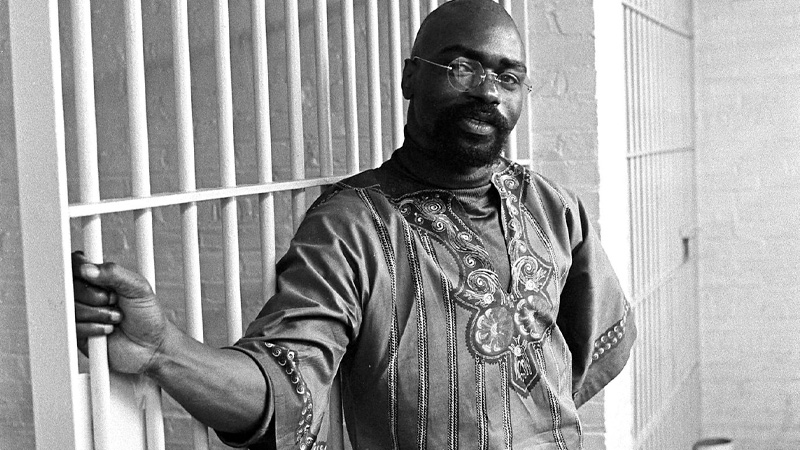
Convicted in 1967 starting life sentences, their terms were finally overturned in 1985 with them being released by a Petition of Habeas Corpus. While in prison, Rubin wrote his autobiography, which he entitled The Sixteenth Round. It inspired Bob Dylan to note the song Hurricane in 1975. Then the film Hurricane in 1999 starring Denzil Washington, which won him the Golden Globe for Best Actor.
Rubin`s boxing career spanned 1961 until 1966, when the long arm of the law applied a cloying stranglehold upon it and him. A power puncher he was a crowd pleaser. He defeated contenders Florentino Fernandez, Holley Mims, Gomero Brennan and George Benton.

His big break came when he dropped and stopped the Great Emile Griffith in round one. He also defeated future heavyweight champion Jimmy Ellis. Rubin fought world middleweight champion Joey Giardello for the title. He rocked Joey badly with a cluster clutter of rights in round four, but the champion composed himself and went on to win a UD over fifteen rounds.
Rubin`s career was curtailed by prison. Prior to this, in five short years he fought forty bouts winning twenty- seven, including nineteen KO`s, twelve defeats and one draw. We`ll never know if he could have earned another opportunity to fight for the title. The World Boxing Council which was part of the campaign to gain Rubin`s release, presented him with an Honorary WBC Green and Gold Belt in 1993. Nothing on Earth could give him back those years of his life, which were forever lost, in a ten- foot cell.
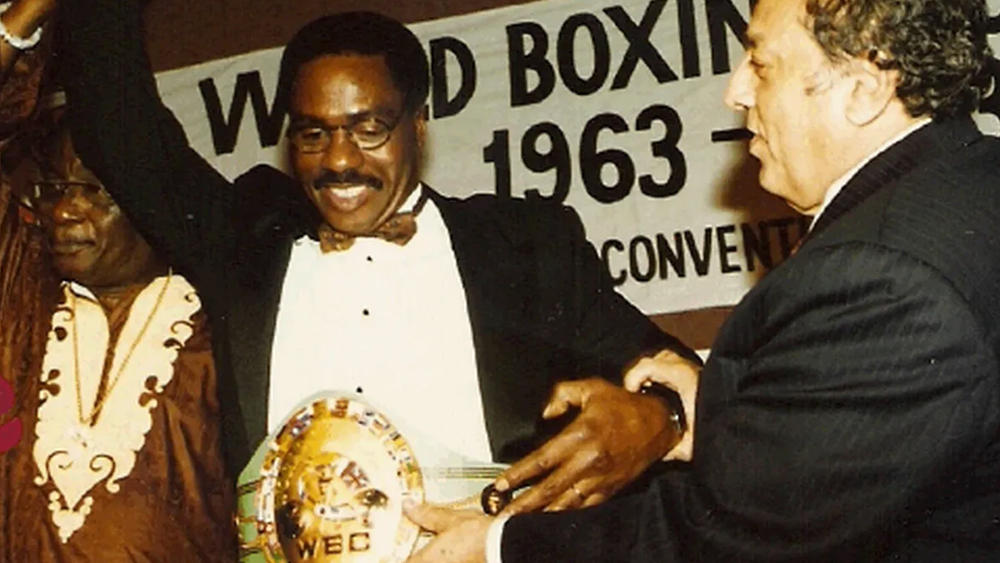
Yet in his darkest hour, Rubin remained steadfast, refusing to be despondent or give in. He battled back, fighting from within, seeking justice. Mind over matter mindset. The World Boxing Council was one of the very few, who stayed by his side and in his corner, remaining constantly loyal, convinced of his innocence and striving for justice, which Rubin sought with the tenacity, courage and resourcefulness of a champion. This, is what true Champions are made of!
Rubin passed away in 2014, after a so brave battle against prostrate cancer. His words of optimism and determination devoid of bitterness, continue to define him. He said: ‘’To live in a world where the truth matters and justice however late really happens. That would be Heaven for us all.’’
Described as the greatest fighter to never win a world title, the name of Sam Langford resounds in the history of Boxing. Sam`s illustrious career was 1903-1926. Standing only five feet seven and a half inches tall, yet his reach was an extraordinary seventy- four inches.
Nova Scotia born Sam fought two hundred and fifty- three bouts involving 1,988 rounds. His record is an extraordinary 178-30-38, including 126 KO`s. There were thirty-eight draws, sixty newspaper decisions and eight no contests.

To put bread on the table he fought fellow black fighters Sam McVey, Battling Jim Johnson, Joe Jeanette and Harry Wills numerous times. He and Joe Jeanette battled fourteen times. He fought Jack ‘’Chappie’’ Blackburn six times. Chappie would later successfully train the great Joe Louis.
In those white dominated times, Sam was nicknamed ‘’The Boston Tar Baby.’’ Massively outweighed, he fought and lost to future heavyweight champion Jack Johnson, who steadfastly refused to fight him ever again. Sam became the so-called Coloured Heavyweight Champion, after Johnson vacated it to go for the other version.
Sam defeated reigning lightweight champion Joe Gans, but unfortunately it was in a non-title fight. He did fight ‘’Barbados’’ Joe Walcott who was world welterweight champion cutting him as early as round two, knocking him down in round three and handily outboxing him, but having to settle for a draw. Sam fought middleweight champion Stanley Ketchell in a six rounds bout to get another draw.

Sam ended up totally blind and destitute living in Harlem. But then a newspaper story was written about him, entitled: ‘’The Dark Man laughs,’’ drew attention to his plight. Fans donated money in their droves, raising ten thousand dollars, allowing him to live his final years in a private nursing home.
Jack Dempsey said of him: ‘’I think Sam Langford was the greatest fighter we ever had.‘’
A master of boxing and tongue in cheek understatement, Sam once proffered, while furtively glancing at his pocket watch: ‘’You`ll pardon me gentlemen if I make the fight short. I have a train to catch.’’
Harry Wills held the Coloured Heavyweight Championship three times but was marked out by the ‘’Colour Line,’’ drawn with a firm finality, on the threshold, by the white heavyweight champions and their management.

Nicknamed the Black Panther, Harry stood six feet inches tall and has an extraordinary reach of eighty-four inches. He was the number one heavyweight contender 1915-17, but never got his chance. Harry defeated Willie Meehan who had won a decision over Jack Dempsey. He fought Luis ‘’Wild Bull of the Pampas’’ Luis Angel Firpo to a no decision. He defeated Coloured Heavyweight Champion Sam McVey three times. He fought Sam Langford twenty-two times.

In May 1922 the New York Daily News polled its readers, asking them to choose who Champion Jack Dempsey should fight next. More than 45,000 readers replied and Harry Wills topped the poll with 12,177 votes. Jack agreed to the fight, but it never materialized.
Charley Burley doesn’t have a nickname I can find. It should have been Genius. Eddie Futch described him as: ‘’The finest all-round fighter I ever saw.’’ Archie Moore, who was knocked down by him four times on the way to being soundly outpointed said: ‘’The man was a disaster to anyone who came near him in the ring.’’

Charley outpointed future world champions Billy Soose and Fritzie Zivic. He won the Coloured Welterweight Championship from Cocoa Kid with a UD, but not before knocking him down three times. Charley won twenty fights in a row before losing a decision to Ezzard Charles. He won the Coloured Middleweight title by stopping Holman Williams in nine rounds.
I`m indebted to the talented, knowledgeable and kind Eric Armit for so much information about Charley Burley. Eric says: ‘’The Ring Record Book and Encyclopaedia has composite ratings for the years Burley was active and he was usually two or three at welterweight and middleweight. But in the monthly ratings, he held number one spots in both divisions. Despite that he never landed a title fight.

‘’He did not have the right connections and was a craftsman rather than a slashing, crashing, bashing fighter.’’ Charley was never stopped in ninety-eight bouts.
Jimmy ‘’Cleveland Spiderman’’ Bivins` career was 1940-55. He defeated eight men who went on to win world titles, but was never given the opportunity himself, in spite of at one time being the number one contender both at light heavyweight and heavyweight. Remarkable, because he was only five feet nine inches tall. Among those victories he beat Billy Soose, Gus Lesnevich, Joey Maxim and Archie Moore. He KO`d Archie in six, knocking him down six times. Years later Archie defeated him twice.

After losing a SD to Bob Pastor, which he eventually avenged, Jimmy went on a four years twenty-seven winning streak. After losing a SD to Jersey Joe Walcott, Jimmy`s career wasn’t the same. It was 86-25-1, 31 KO`s. He never got an opportunity to fight for a world title…alas.

The Pride of Tepito, Luis Villanueva Paramo, better known and beloved as Kid Azteca, is a member of an exclusive club of fighters, who fought over four decades. Archie Moore, George Foreman, Roberto Duran and Roy Jones Jr, all became world champions. Kid Azteca who fought from 1932-1961 did not. Some sources say he began his pro career aged thirteen in 1926.

He officially started in Laredo, Texas, calling himself Kid Chino. But by 1927, Curly had become Kid Azteca and way back then he was trained by Marcano Azocar. He won a twelve- round decision over David Velasco to gain the Mexican welterweight championship. On July 11th 1933, Kid Azteca defeated future middleweight champion Ceferino Garcia on points over ten rounds and fourteen days later he KO`d Garcia in eight rounds. He lost two fights to him in later years.
Kid Azteca fought top rated challenger Herbert ‘’Cocoa Kid’’ Lewis twice in one week, drawing and then outpointing him. He fought future welterweight champion Fritzie Zivic losing a ten round decision and he fought lightweight champion Sammy Angott losing another ten rounder.

With the advent of television in Mexico, Kid Azteca became an icon on Televisa . His final fight was on February 3rd 1961, when he KO`d Alfonso Macalara in the first round. Kid Azteca`s extraordinary final tally was 191-47-11, 113 KO`s. But a world title eluded him.
Jose ‘’Joe’’ Medel fought at flyweight, bantamweight, featherweight and lightweight. But he thrilled the most as a bantam. ‘’El Huitlacoche’’ was competing in a golden age. He fought and lost to Eder Jofre, Fighting Harada, Lionel Rose and Ruben Olivares.

Eder Jofre described their first fight which was an NABA Eliminator, as the hardest fight of his career. At the end of the ninth he told his father he couldn`t continue. Dad retorted, reasoning that Jose was even more tired and so it proved as the Golden Cockerel dredged up one last effort to KO Jose.

Jose again fought Eder, this time for the WBA title, being dropped in the fifth and counted out in the sixth. Unabashed he fought Fighting Harada losing by TKO in six but not before dropping the Japanese superstar. He consoled himself by going to the Empire Pool, Wembley and stopping ‘’Wee’’ Walter McGowen in six. Then back to Tokyo to rematch Fighting Harada for the WBA title, losing a thrilling UD. And then losing his Mexican title to Chucho Castillo. He`d won it by defeating legend Jose Toluco Lopez. Jose lost on points over ten rounds to Lionel Rose and then Ruben Olivares KO`d him in eight.
Jose died so young at sixty-two of cancer. I met him a couple of years before this. Pristine with a monogrammed white shirt, still trim with an upright almost military bearing, he had a fine singing voice and a marvellous sense of humour. He, Raul Raton Macias, Jose Mantaquilla Napolis, and Ultiminio Ramos sang an A Mi Manera serenade to Don Jose, which brought the house down. How Don Jose loved this!

Jose lost to some greats but he also notched some notable wins against Dwight Hawkins, Jose Toluco Lopez, Danny Kid, Hernan Marquez, Mitsunori Sekii and Haruo Sakamoto. Jose thrilled the fans in Tokyo.
After his passing, Raul Raton Macias said his death would sadden Mexican fans, but Japanese fans would feel the loss even deeper. He fought so hard body and soul, bounced back time and again but never quite made it to the very top. Not for lack of trying! Back in those days, a loss wasn`t the end of the world. It much more depended on the fight you put up. Jose`s record of: 69-31-8, 44 KO`s reflects this.
There`s a photo of Ruben Castillo and Julio Cesar Chavez arm in arm grinning ear to ear. They are great friends, sharing the same irreverent sense of humour. Over following the post-fight career years, Ruben has often helped Julio with translation. But there was a time, that the pair swopped fire and brimstone, so much so that Ruben was dispatched on to the canvass, saying he was hit so hard to put him there, that he couldn`t feel his legs. Ruben grins as he ruefully remembers in that fight on that night, Julio broke a couple of his ribs and fractured one of his cheekbones. Afterwards Ruben generously advised Don King to sign up Julio permanently and PDQ, telling Don that like a steam roller…Julio was going places!

Ruben started off like a train on fire. He was undefeated in thirty- six fights and then challenged and defeated James Martinez via UD for the USBA featherweight title. Unbeaten in forty- two fights he audaciously moved up to super-featherweight to take on the Great Alexis ‘’Thin Man’’ Arguello. An intriguing and very close fight, until round eleven when the champion KO`d Ruben.
Ruben slimmed back to featherweight and fought WBC champion Salvador Sanchez. He input a mighty effort and was ahead on points after six rounds. But Sal rallied to defeat him by a UD after fifteen rounds. Reuben insists to this day that he won it. Chatting for an hour afterwards, Sal promised Reuben a rematch, but it didn`t happen. Reuben doubted it would.

After Salvador so tragically died in a traffic accident, Juan Laporte was the champion and Ruben, who has since become a great friend, fought him with vigour. Juan knocked down Ruben in rounds eleven and twelve to win a UD.
The final hurrah was against JC Chavez, who was a holy terror twenty- two year- old powerhouse as WBC super-featherweight Champion. Ruben held his own until round four with a crisp left jab and magnificent toe to toe attack. He didn`t and he wouldn`t back off. When he got caught with a juddering left hook in round four, Reuben cheekily waved his right glove for JC to bring it on, declaring: ‘’Is that all you`ve got?’’… he wasn`t disappointed by shy away reticence. Chavez sunk in some wicked body hooks in round five. And then nailed Ruben with more hooks and uppercuts to the head in the sixth.
Ruben went down from delayed reaction to this intense, unrelenting thudding bombardment, coming out of a clinch, and tried to level beat the count, but then sank back to the canvass, as his numb legs, simply wouldn`t obey him. The spirit was willing!

During his career of 67-10-2, 35 KO`s, he fought one helluva hellacious collection of Hall of Famers and gave his absolute all. If those all- time greats hadn`t all been around at the same time, Ruben would surely have been a world champion. Yet, he didn`t flinch for one second in fighting, Arguello, Sanchez and Chavez. Never a dull fight, always a thrilling fighter! What a fighter, what a competitor and a real character, who I`m proud to call a dear friend.
There`s a terrible lingering sadness about the career and the life of Jerry Quarry. Joe Frazier who defeated him twice in fearsome slugfests said: ‘’Jerry was a very tough man. He could have been a world champion but he cut too easily.’’
Jerry fought more than two hundred amateur fights before turning pro. His pro career was 53-9-4, 32 KO`s. In sparring, he didn`t use a headguard. He started out as a counter-puncher, but unwisely switched to becoming a walk
forward hit and be hit fighter, often disregarding defence.

He himself said: ‘’When I first started, I was a counter-puncher, but I got a lot of bad reports from the California writers. They said that I would hit a man and hurt him, but not follow up. So, I changed my style to become an aggressive fighter. I was a young guy, who was kind of cocky and I wanted to prove something. Now…I don`t have to prove anything and I`m going out to win fights.’’
Jerry was too brave for his own good. His father Jack warned him: ‘’Toughness is not related to winning.’’ Jerry was good, but he wasn`t quite elite, at a time when the heavyweight division was bristling with brilliance.
In his time, Jerry notched some tremendous wins against Floyd Patterson, Thad Spencer, Buster Mathis, Brian London, Ron Lyle and Earnie Shavers. But Joe Frazier and Muhammad Ali each defeated him twice.
Jerry`s first fight against Joe Frazier was a frightening war of attrition. By round seven Jerry was cut over the left eye and bleeding heavily from the nose. The fight was stopped then and there. Then Jerry fought the Hard Rock of Canada, George Chuvalo. Jerry was winning, but got knocked down in the seventh, got up, but then had to take a knee and was counted out by Referee Zach Clayton.

Just before the opening bell in his first fight against Muhammad Ali, The Greatest teased Jerry, telling him: ‘’You`re in trouble boy. You know that!’’ Jerry retorted: ‘’Just shut up and fight!’’ The two of them burst out laughing and got to it.
By round three Jerry had a massive cut over his left eye. His Coach Teddy Bentham who was an experienced cut man, realized it was too severe to continue and stopped it before the start of round four.
Jerry fought British and European champion Jack Bodell and was asked if he`s found him awkward? Jerry who dispatched Jack with two mighty rights in just sixty- four seconds answered: ‘’Well he fell awkwardly.’’
Jerry pressed hard for a rematch against Ali and he got his wish. It was Ali`s first fight coming back from his Viet Nam banishment. By round seven, Jerry was an open target, being hit by salvos of rights from the Greatest, who pleaded with the Referee to stop the fight, to prevent serious damage.

Jerry was magnificent in his next fight, stopping hard-hitting Earnie Shavers in round one. But accumulated wear and tear was evident in fight two against Joe Frazier. By round four he was cut over both eyes and taking a fearful beating. Referee Joe Louis stopped it early in round five, not a moment too soon.
Jerry died aged just fifty-three of pneumonia, a complication of pugilistic dementia, also suffered by his brother Mike. They were cared for by James, the only one of four brothers who had not boxed.
Before the fog of dementia tragically descended, set it and enveloped, Jerry hauntingly said: ‘’I gave it my best shot, but it just wasn`t good enough.’’ How he is still missed.
Earnie once bluntly said: ‘’Only God punches harder than me!’’ God has not yet answered one way or the other. But opponents tend to think it was Earnie.

Muhammad Ali who successfully defended his WBC title by defeating Earnie via UD in 1977 said that he heard bells and whistles when Earnie hit him. Two years later Earnie took on Larry Holmes for the second time. By now, Larry was WBC champion. He was decked face down by an Earnie cannonball in round seven, showed his remarkable powers of survival, by getting up and somehow recovering, to TKO a tiring Earnie in the eleventh.

Larry said: ‘’Earnie hit me harder than any other fighter including Mike Tyson. Being hit by Mike Tyson was like being hit by a speeding Ferrari. But being hit by Earnie was like being hit by a Mack Truck. I always tell Earnie that he hit me too hard. If he hadn`t hit me quite so damned hard he would have KO`d me for sure. The punch kind of woke me up as I hit the canvass. I was hearing saxophonist Jimmy Tillis!’’
Earnie dropped Ron Lyle in round two, but Ron got up and stopped him in six. Ron ruefully recalled: ‘’When Earnie hit you the lights went out. I can laugh about it now, but at the time it wasn`t funny.’’
Randall ‘’Tex’’ Cobb who TKO`d Earnie in eight, winces and shudders as he remembers that night saying: ‘’Earnie could punch you in the neck with his right hand and break your ankle.’’
Earnie once said: ‘’I firmly believe I`m the hardest born puncher.’’ But he also credits hard physical work on the family farm in Alabama as a child and a youth, in building a powerful, muscular frame and a tensile steel inner core. He turned pro at a relatively aged twenty- two. His big break came in defeating Jimmy Ellis in one round at Madison Square Garden in 1973. He described it as the best night of his career. He also KO ken Norton in a single round. Earnie defeated Ellis, Jimmy Young, Joe Bugner, Henry Clark and Roy Williams. His 76-14-1, 70 Kos career spanned 1969-1995.

Earnie could have hit the big time in the movies. In 1982 he auditioned for the part of Clubber Lang in Rocky 111. He was sparring with Sylvester Stallone who insisted Earnie fight for real. Earnie clipped him in the ribs with a left, using less than fifty percent of his power. Sly doubled up, had to be escorted to the bathroom and almost vomited his guts out, saying: ‘’that’s the closest to death I`ve ever been.’’
The part went to Mr T.
Another Big Hitter, David Tua was nicknamed The Tuamanator. His bobbing and weaving style was compared to that of Mike Tyson. Sixteen of his wins were in the first round. He KO`d John Ruiz and Michael Moorer within thirty seconds each.

David romped through his first twenty-seven fights with twenty-three KO`s. He won the WBC International title with a one round KO of John Ruiz, successfully defending it three times with KO`s of Darroll Wilson, David Izon and Oleg Maskaev. But lost it when he took on also undefeated Ike Ibeauchi they threw a combined record of 1,730 punches according to CompuStat. That`s an average of eighty-one per round. The heavyweight norm is fifty.
David was WBC and IBF Mandatory Challenger of Champion Lennox Lewis. He came into the fight with a 37-1 record, calling Lennox a lazy fighter with a suspect chin, who got tired after three or four rounds. But that didn`t happen. In a listless and disappointing fight, Lewis easily outpointed the much shorter Tua. Lewis, six feet five inches tall with an eighty- four inches reach. While Tua was much shorter, standing at five feet ten with a seventy inches reach.

David Tua ended his career with a record of fifty-nine fights, fifty-two wins including forty- three KO`s and five losses. An 82.6 percent KO record. His one and only chance against Lennox Lewis came and went, rather tamely.
Herol ‘’Bomber’’ Graham would sometimes stand on a handkerchief, daring bystanders to try and hit him. They very seldom managed to swipe anything apart from fresh air. It was a breeze for Herol! He was so elusive in sparring that Alan Minter halted the session and angrily accused him of being a limbo dancer. Herol ‘was a quick silver talent, and an elusive pimpernel…for a while.
A three- time world title challenger, yet Lady Luck didn`t smile upon him. Based at Brendan Ingle`s gym in the steel city of Sheffield, Herol was undefeated in this first thirty-eight fights. He won the British, Commonwealth and European super-welterweight crown plus the British and European middleweight belts. But then lost his European middleweight belt to Sumbu Kalambay.

He fought Mike McCallum for the vacant WBA middleweight title, losing a close SD. Deducted points for punches to the back of the head, cost him dear. Then he fought the mighty Julian ‘’The Hawk’’ Jackson for the WBC middleweight belt. Coasting after four rounds and surely on his way to victory, a badly cut and tiring Jackson, caught him with a monumental right cross. It lifted Herol off his feet, almost into orbit and he was unconscious before he hit the canvass. That thunderbolt has been called Punch of the Century. No count following that clout was necessary from Referee Joe Cortez, who swiftly attended to stricken Herol. A-tishoo, A tishoo…we all fall down. Herol described it as: ‘’Like being kicked by a horse…of course.’’
After four years of inactivity, Herol returned and his final tilt at gilt edged glory, was challenge for Charles Brewer`s IBF super-middleweight title, being TKO`d in the tenth. He retired, became a personal trainer and wrote his autobiography entitled: ‘’Bomber behind the laughter.’’ His record stands at 48-6, 28 KO`s. For Herol, it didn`t prove to be third time lucky.

There are so many nearly men in Boxing, you have to take your pick. Another is ‘’The Gifted One’’ Kirkland Laing, who defeated Roberto Duran in Detroit, but then went AWOL for a year and any opportunity of a World Championship challenge, slipped through his fingers like mercury. Of wide stance, with hands held low, relying on his cat like reflexes, Kirk could be infuriatingly elusive. John H Stracey recalls that a frustrated Jimmy Batten once kicked Kirk during a sparring, session and was temporarily banned from the Royal Oak Gym in Canning Town by Terry Lawless, until it was patched up. But that`s a story for another time.
To become a world champion, you need God given ability, but also perseverance, the instinct to duck plus a generous slice of luck. Muhammad Ali exquisitely described it by saying: ‘’No one starts out on top. You have to work your way up. Some mountains are higher than others. Some roads are steeper than the next.

‘’Even on the steepest road, you must not turn back. You must keep going. In order to reach the top of the mountain. You must climb every rock.’’
And now Muhammad Ali and Joe Frazier are joined, combined and mingled in history. having departed on the road of no return to embrace Eternity, Joe concludes with the profoundly poignant observation about fighters who became champions… and those who tried their utmost but didn`t quite make it, because their combined greatness, is reflected in their valiant efforts, come what may.
Joe said: ‘’I earn what I win. I punch and get punched. He lays it on me and I lay it on him. That`s what fighting is about. The people pay…I pay.’’

test