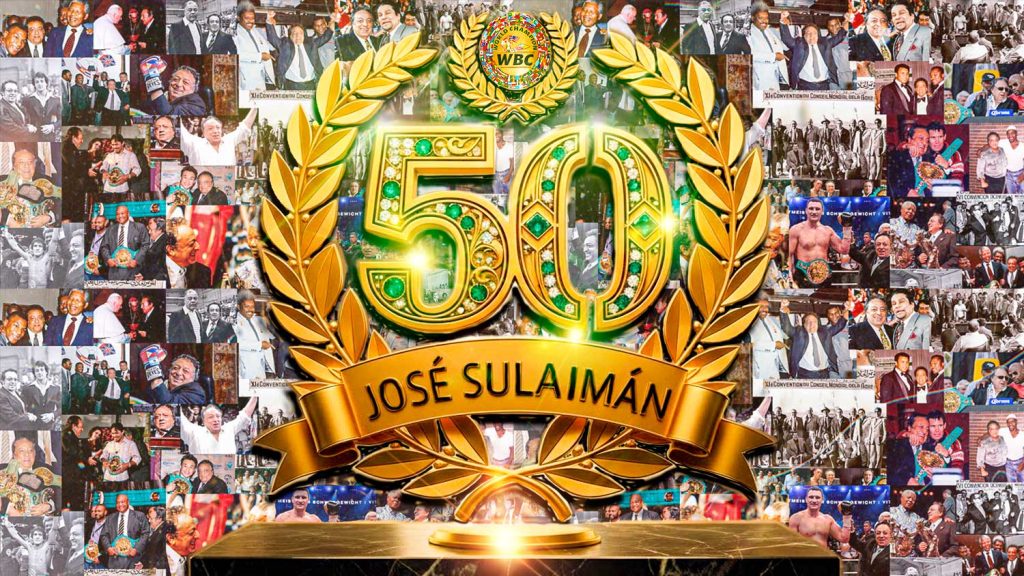

On December 5, 1975, at a convention held in Tunis, North Africa, José Sulaimán was elected president of the World Boxing Council (WBC). This event not only marked the beginning of a mandate that would span over 38 years, but also the start of a profound transformation in the global boxing industry.
Under his leadership, the WBC not only consolidated its position as the world’s most influential governing body, but it also became a driver of social change and a tireless advocate for the lives and dignity of boxers.
The core of Don José Sulaimán’s legacy lies in his crusade for safety. Understanding boxing as a noble, yet inherently dangerous sport, he pioneered reforms that has and continues to save countless lives and the quality of life for boxers after their careers in the ring:
Round Reduction: His most crucial initiative was the reduction of world title fights from 15 to 12 rounds, a measure designed to protect boxers from dehydration and exhaustion and accumulated brain trauma in the final rounds.
Medical Protocols: Changing the official weigh in from the day of the bout to one day before is the greatest safety rule; He also established mandatory weigh-ins 30, 14 and 7 days before the bout, and most importantly mandated rigorous yearly, pre fight and post fight medical examinations as well as mandatory antidoping tests since 1976.
Gloves and Equipment: Introduced the ring with 4 ropes, advocated for the use of higher-quality gloves with thumb-attached and the implementation of standardized hand-wrapping techniques to maximize protection in addition to countless technical protocols and rules.
Don José’s impact transcended the ring, as he utilized the WBC platform to champion social justice causes. One of his most audacious actions was his stance against the Apartheid regime in South Africa. The WBC the first sports organizations to ban South African, movement which was joined by most sports afterwards.
Don José Sulaimán’s vision transformed the WBC into an entity of diplomatic influence. Throughout his four decades at the helm, he met with world leaders and figures, promoting boxing as a tool for peace and development:
The Vatican: Visited Pope John Paul II on multiple occasions. The Pope was always an admirer of the sport and its potential to foster discipline and personal achievement.
Thai Royalty: He forged a special bond with King Bhumibol Adulyadej of Thailand, a country with a deep boxing tradition, elevating the sport’s profile in Asia.
Government Leaders: His capacity to engage with heads of state worldwide—from presidents to prime ministers—allowed him to establish WBC regulations in virtually every corner of the planet, ensuring that his safety standards were applied universally.
The legacy of José Sulaimán, who passed away on January 16 2014, is that of a leader who put boxers first, cementing the WBC not only as a champion of records, but as a champion of ethics, justice, and humanity.

test