
On October 30th, 1974, one of the greatest sporting events in history unfolded enveloped in the searing heat of a velvet African night right, in the heart of Zaire… now Congo: The Rumble in the Jungle presented by Don King.
The most magical, incredible, irrepressible, irresistible, charismatic and dramatic fight, Rumble in the Jungle saw Muhammad Ali regain the World Boxing Council title at thirty two by knocking out formidable twenty five year old undefeated By Jove thunderbolt puncher George Foreman. in Kinshasa.
In round one Ali surged forward and hit George with a booming straight right to the forehead. But thereafter, he conserved his energy, covered up and restricted George to fighting at short range, in what’s since dubbed the rope a dope tactic, counter punching and covering up defensively.
Ali caught George time after time with those stinging, energy sapping, snapping right hand leads to the face and used catlike reflexes to evade, parry or deflect incoming artillery. Yet, George pounded Ali’s body with fearsome punches.
George seemed to dominate round five, but in the last thirty seconds Ali spun off the ropes and landed some powerful jolting rights, which momentarily stunned George, who was wilting in the oppressive heat and is enwrapping humidity.
It was a rehearsal for round eight, when Ali caught George with a five-punch combination. A left hook set him up and a short right dropped him. George stumbled and Ali followed him all the way down with his right hand cocked, but never hit him again. Referee Zack Clayton counted George out. Minutes later the heavens opened, and the monsoon started. Ali was champion of the world again. He’d accomplished the seemingly impossible by defeating Big Young George.
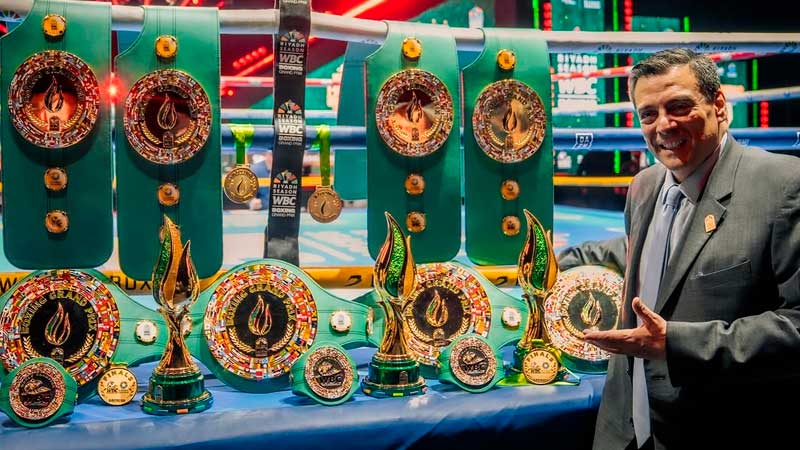
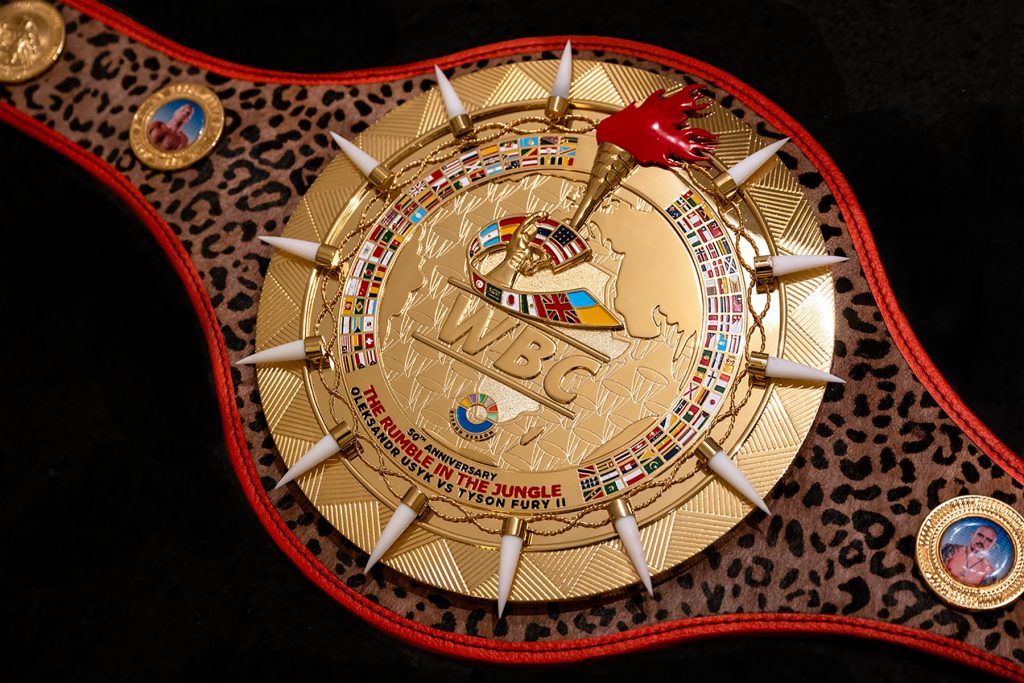
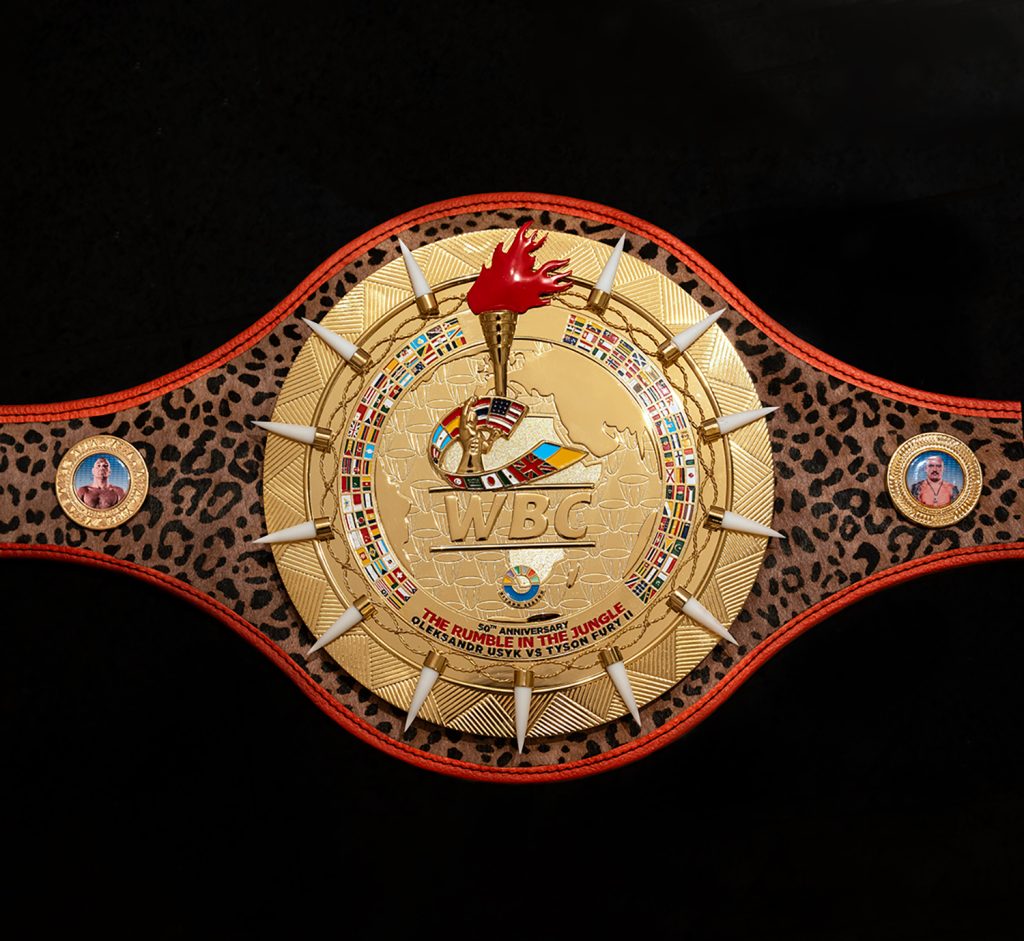
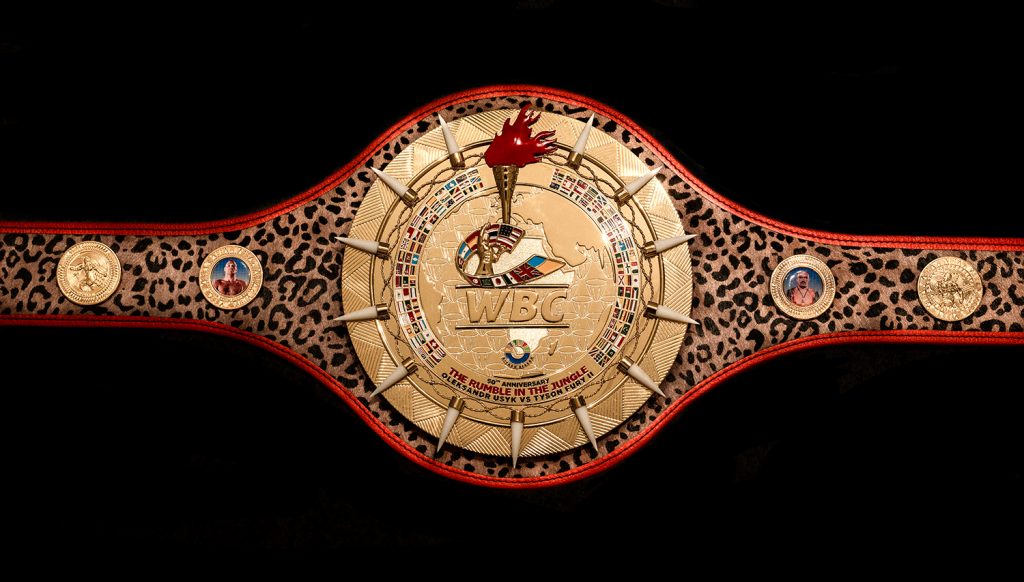
In order to celebrate this iconic moment for boxing, the World Boxing Council decided to create various campaigns, among them: the creation of the #RumbleInTheJungle belt to be presented to the winner of Usyk vs Fury 2 presented by #RiyadhSeason; which was eventually was won by Oleksandr Usyk.
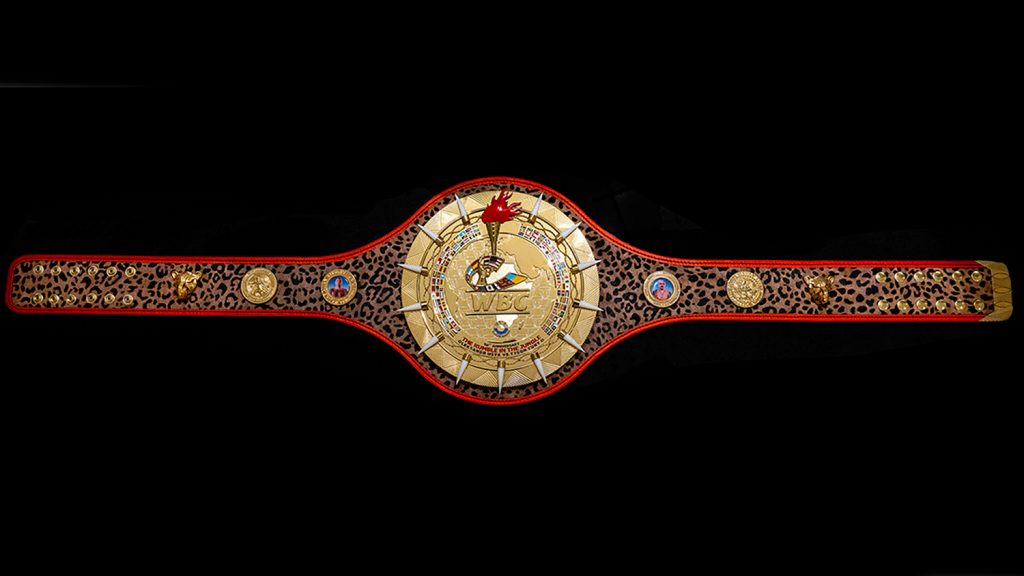
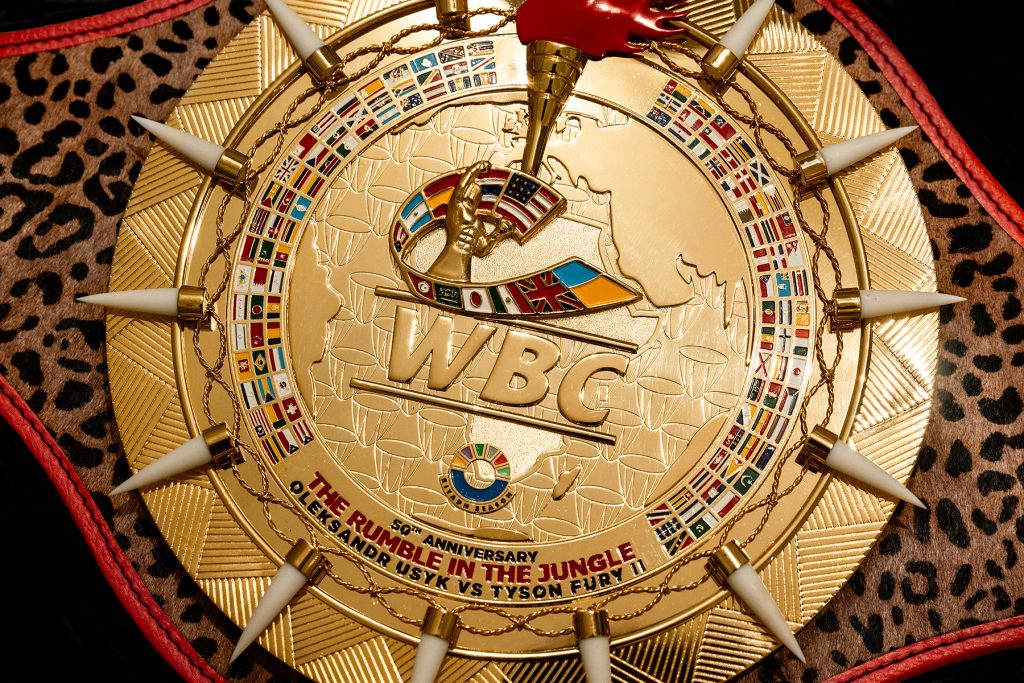
The “Rumble in the Jungle 50th Anniversary Belt” was designed to celebrate both the legacy of the fight and the rich culture of Africa, the belt serves as a tribute to this legendary context event’s lasting impact on sports and history.
Central Medallion: It features a detailed map of Africa with Zaire highlighted in gold leaf, surrounded by the flags of WBC member countries. A torch symbol at the top represents Zaire’s revolutionary spirit, and the “Rumble in the Jungle 50th Anniversary” inscription commemorates the iconic fight.
Muhammad Ali & George Foreman Medallions: Each fighter is represented by a gold medallion—Ali symbolizing speed and agility, Foreman representing strength and power. Their iconic stances honor their roles in the legendary match.
Leopard Print Straps: The belt features a bold leopard print design, a tribute to African wildlife and the jungle setting of the original fight. also figured
Leopard tooth chains: is a symbol of the monarch of the jungle who have conqured all the big fangs animals to add to his collection, hence the representation of champoinshiop and winning.
Panther Head Sculptures: Gold panther heads on either side symbolize African power and strength, connecting to the cultural theme of the belt also paying homage to the curerent element found in Congo’s emblem.

test